
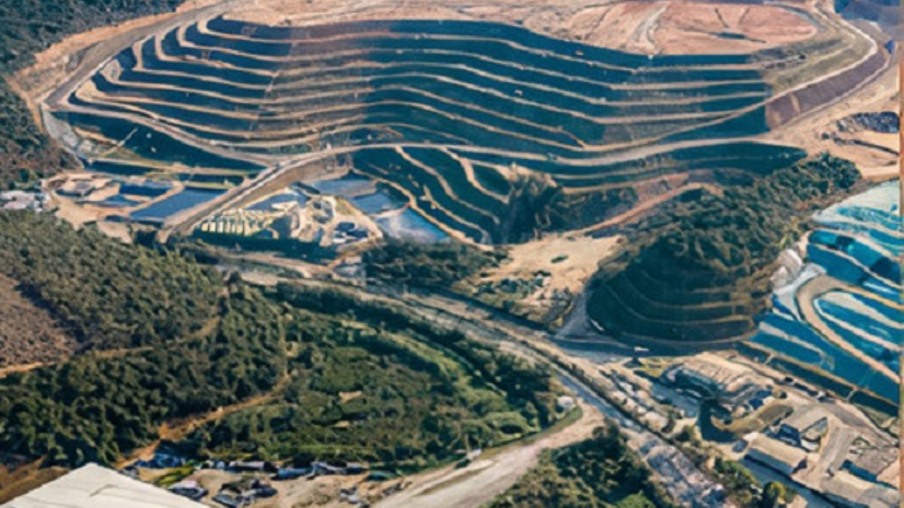
Leachate is the liquid resulting from the decomposition of organic matter present in waste, with a high potential for environmental pollution. Therefore, it is essential to understand what leachate is and how to properly treat it.
What is leachate?
Leachate is a dark-colored liquid with a characteristic odor, mainly formed through two processes:
- Decomposition of organic matter – food scraps and other biodegradable waste are broken down by microorganisms, releasing liquids.
- Water percolation – rainwater (or the waste’s own moisture) passes through landfill layers, carrying decomposing organic matter as well as other materials present in the waste.
When people refer to leachate, it is common to imagine a dark, foul-smelling liquid that causes major environmental impacts by contaminating soil and water. However, this strong-smelling material is simply the result of organic matter decomposition.
Leachate can pose a significant risk to soil, groundwater, rivers, lakes, and public health. According to Gustavo Souto Maior, from ABREMA, “Waste leachate is one hundred times more polluting than domestic sewage and has the ability to contaminate soil and groundwater.”
The composition of leachate
Leachate is generally considered a highly polluting effluent. Its main components include:
- Organic matter in high concentrations, resulting in extremely high chemical and biochemical oxygen demand.
- Heavy metals: lead, mercury, cadmium, zinc, arsenic.
- Ammoniacal nitrogen and nitrogen compounds.
- Chlorides and sulfates.
- Pathogens: viruses, bacteria, protozoa, and helminths.
However, its composition varies depending on the waste received, the local climate (heavy rainfall increases leachate production), and the age of the leachate (in newer landfills, leachate is more concentrated; in older landfills, it is more stabilized).
Environmental and public health risks
Untreated leachate is a major environmental hazard, with impacts such as:
- Soil and groundwater contamination: infiltration compromises aquifers and drinking water reserves.
- Pollution of rivers and lakes: improper disposal increases the organic load and causes eutrophication, reducing oxygen in the water and killing fish.
- Unpleasant odor: causes discomfort to surrounding communities and attracts disease-carrying vectors.
- Direct risks to human health: contact with or ingestion of contaminated water can cause poisoning, severe diarrhea, hepatitis, and other waterborne diseases.
- Greenhouse gases: associated with organic decomposition, it releases methane (CH₄), a gas 28 times more potent than CO₂ in global warming.
Not surprisingly, Brazilian legislation is strict regarding leachate management, requiring adequate collection, treatment, and monitoring systems in sanitary landfills.
Leachate treatment is directly linked to the National Solid Waste Policy (PNRS – Law No. 12,305/2010), which mandates environmentally appropriate waste disposal. It is also addressed in CONAMA Resolution 430/2011, ABNT NBR 8419, and state and municipal regulations.
Failure to comply with these regulations may result in fines, embargoes, and civil and criminal liability.
Leachate in sanitary landfills
In modern sanitary landfills, the problems caused by leachate are prevented from the design stage onward, since a series of mechanisms must be implemented to ensure the protection of soil and groundwater.
- Impermeabilization: landfill bases are sealed with layers of compacted clay and HDPE geomembranes, creating barriers that prevent liquid infiltration into the soil.
- Drainage and collection: special drainage systems are installed at the bottom of the landfill and between waste layers to collect leachate and direct it to tanks or equalization ponds.
- Treatment: once stored, the leachate undergoes biological, physicochemical, and membrane treatments.
- Final disposal: after complete treatment, this liquid is ready to be safely discharged into water bodies or reused within the landfills themselves.
Leachate treatment technologies
One of the biggest questions regarding leachate in sanitary landfills concerns the treatment stage and how it is possible to reduce the entire pollutant load. In today’s sanitary landfills, such as those located within Orizon’s ecoparks, advanced technologies are already in operation. Learn more:
- Biological processes: such as activated sludge, microorganisms that consume organic matter.
- Anaerobic reactors (UASB, EGSB), which degrade organic matter and produce biogas.
- Aerated lagoons, an extensive and low-cost system.
- Physicochemical processes: such as coagulation and flocculation, suspended solids removal, and advanced oxidation (ozone, peroxide, UV), which degrades toxic compounds.
- Activated carbon adsorption, consisting of capturing organic compounds and metals.
- Ion exchange, which removes specific ions such as nitrates.
- Membrane processes: ultrafiltration treatment, which removes particles and microorganisms, as well as nanofiltration and reverse osmosis, which eliminate salts and recalcitrant pollutants, resulting in high-quality water.
The most common approach is combined treatment, integrating biological, physicochemical, and membrane stages for greater efficiency.
At Orizon’s ecoparks, more than 1.9 million m³ of leachate were generated in 2025 alone, with 100% treatment. As a result, thousands of cubic meters were converted into reclaimed water, reused in internal ecopark processes.
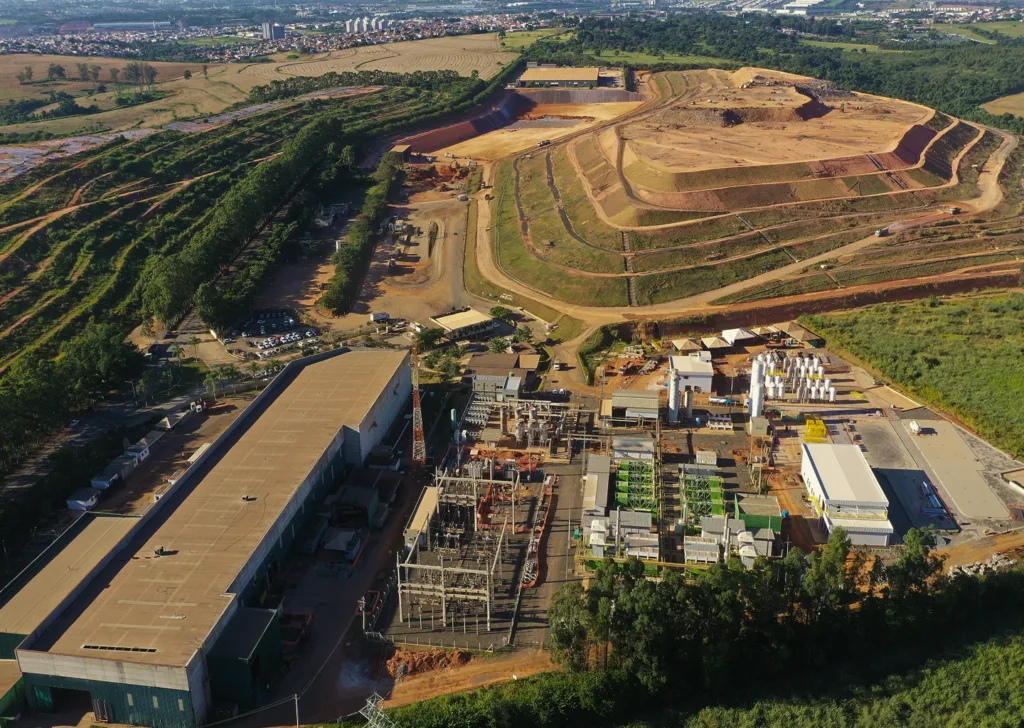
Leachate may be one of the greatest challenges in waste management, but it is also a major opportunity for innovation and the implementation of circular practices. When properly treated, it protects the environment, reduces health risks, and can even generate clean energy and agricultural inputs.
Orizon’s experience shows that it is possible to transform environmental liabilities into economic and social assets, building a sanitary landfill model that goes beyond final disposal: a true ecopark, where waste becomes resources.
 (11) 92217-2054