Atualizado em 17/12/2025 às 09:53
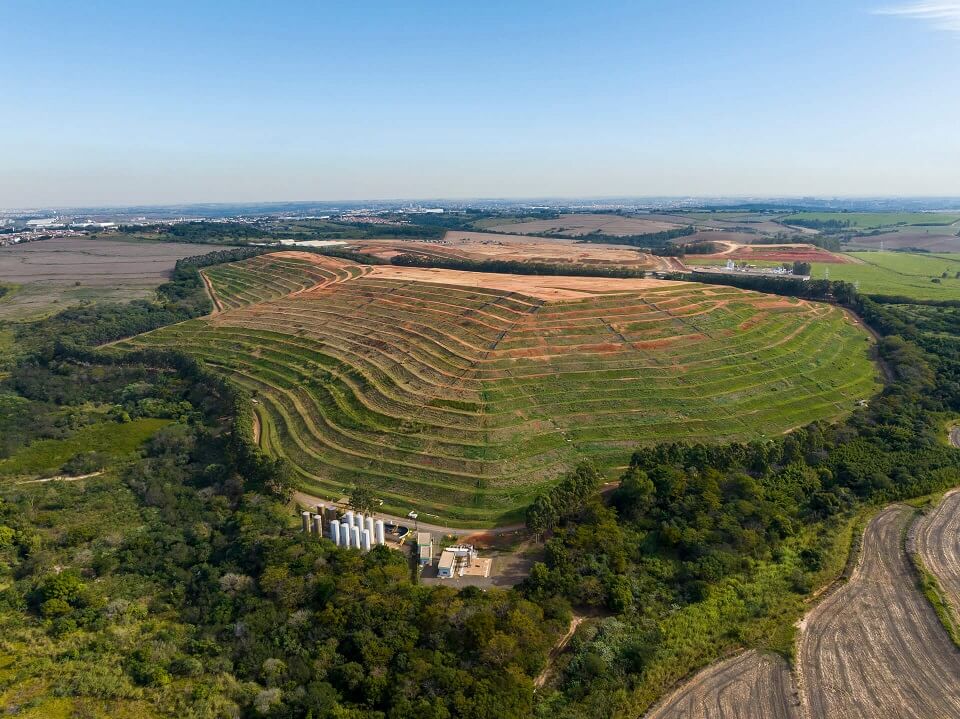
The sanitary landfill is a multidisciplinary engineering project. The structure includes soil waterproofing to protect groundwater, in addition to the proper covering of waste or it can go further, adding value to collected waste, as seen in the Orizon Ecoparks.
The Sanitary Landfill is a response to the challenges of waste management in Brazil. In 2024, 41% of urban solid waste (MSW) was disposed of improperly, causing not only a major environmental impact but also missing opportunities to generate new solutions around these materials through recycling, composting, the production of biogas, biomethane, and other alternatives.
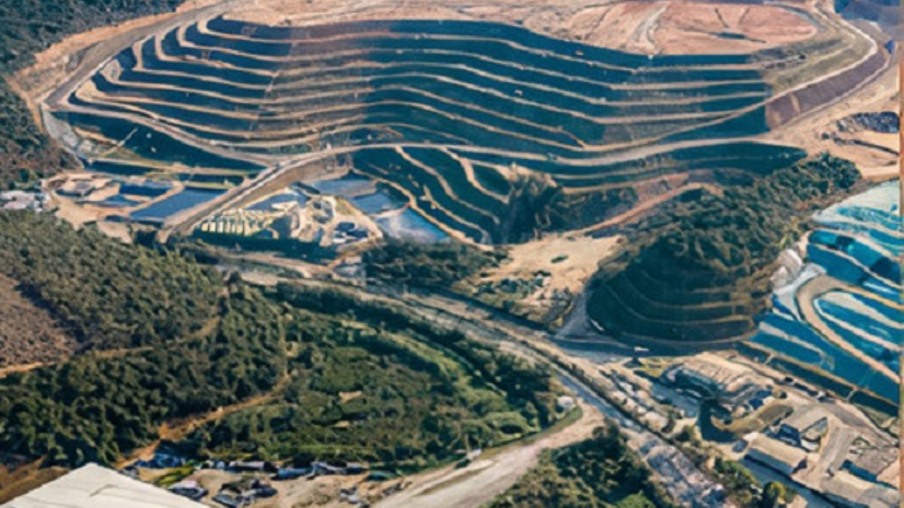
The implementation of these facilities is essential for responsible waste management in Brazil, governed by the National Solid Waste Policy (PNRS), Law No. 12,305, of August 2, 2010, which establishes a series of specific rules that encourage and regulate sanitary landfills, such as:
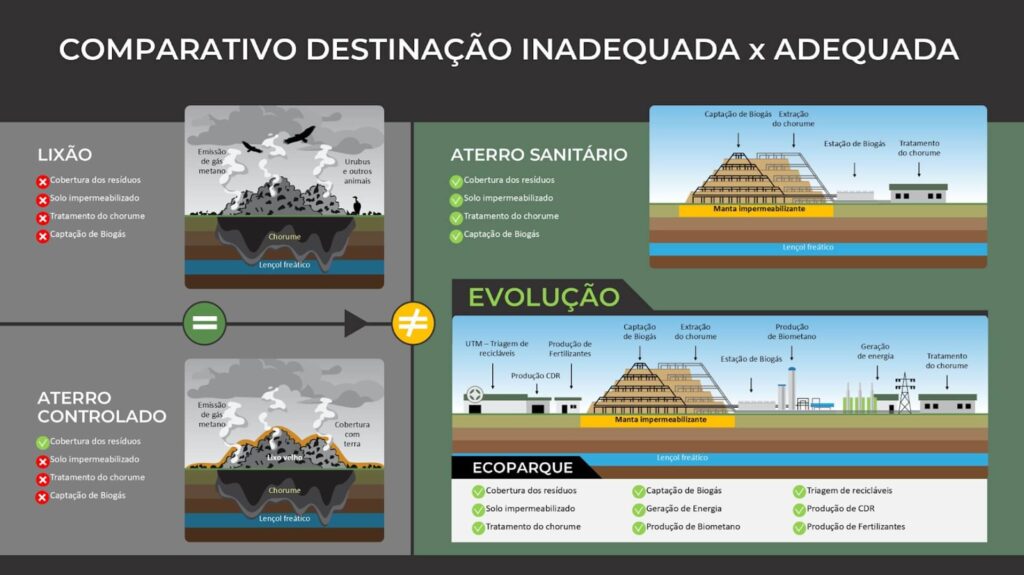
- Prohibition and Deadline for the Elimination of Open Dumps (Art. 54): the law prohibits the final disposal of solid waste in open dumps, establishing that waste must be disposed of in an environmentally appropriate manner, preferably with treatment and reuse before disposal;
- Environmentally Appropriate Final Disposal: sanitary landfills are accepted as the final stage of the waste process, which should allow for reduction, reuse, and recycling. In addition, the infrastructure must include gas control, leachate management, and protection of soil and groundwater;
- Shared Responsibility: the law establishes shared responsibility for the product life cycle, involving government authorities, the business sector, and society;
- Waste Management Plans: requires municipalities to develop Municipal Integrated Solid Waste Management Plans (PMGIRS), which must include guidelines for the implementation and operation of sanitary landfills, including waste disposal and the recovery of degraded areas;
- Technology and Sustainability: encourages the adoption of clean technologies, reduction of waste generation, and energy recovery through biogas capture.
How a sanitary landfill works
A sanitary landfill must be prepared with soil waterproofing, gas capture, drainage, and treatment of leachate, the liquid resulting from the decomposition of materials.
This infrastructure is built over large areas and serves not only to dispose of waste while protecting the environment, but also to prevent inconvenience to the population, such as bad odors and exposure to hazardous components, as well as to ensure that local fauna and flora are not affected.
A sanitary landfill consists of three main structures:
- Base soil waterproofing, consisting of a compacted clay layer covered by a geomembrane, an impermeable material that prevents waste and its liquids from contaminating the soil and groundwater;
- Drainage system for leachate collection and gas drainage pipes, which direct gases to appropriate treatment;
- Overlapping layers of waste which, once the landfill reaches the end of its capacity, are sealed with soil, vegetation cover, or other necessary techniques to protect the decomposing material.
Ecopark: the evolution of the sanitary landfill
The Ecopark is a set of modern and integrated solutions, including the sanitary landfill, for the treatment and valorization of solid waste. It employs technologies that promote the circular economy, enabling sorting, reuse, and environmentally appropriate disposal of waste in a single location.
In a space like an Ecopark, waste is not only contained to prevent environmental damage, but also leveraged to generate a positive impact.
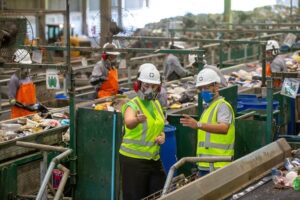
Its main functions include electricity generation from biogas, biomethane production (a renewable fuel similar to CNG), composting to produce organic fertilizer, and mechanized separation of recyclables.
Waste that cannot be recycled or composted undergoes processes such as blending, which results in RDF (Refuse-Derived Fuel), used as an energy source in industrial kilns and boilers, such as those in cement plants. In this way, the Ecopark reduces greenhouse gas emissions, transforms waste into a resource, and offers a safe, efficient, and sustainable alternative to traditional open dumps.