
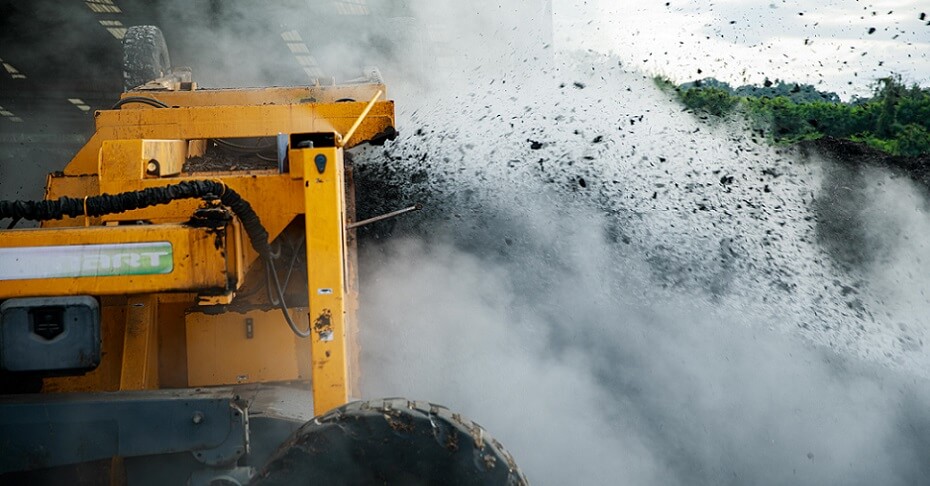
Is it possible to give a responsible destination to the wastewater generated by companies? Not only is it possible, but sludge can become an organic fertilizer when properly treated, contributing to circular waste management.
The path of sludge
Sludge generated in wastewater treatment plants (WWTP) can be sent to landfills or to specific treatment processes. When poorly managed, it can pose environmental risks such as soil and groundwater contamination.
On the other hand, technologies such as composting allow this material to be valorized, transforming it into a highly useful input: organic fertilizer.
The advantage of this technique is reducing the volume pressure on landfills, as well as minimizing methane and other greenhouse gas emissions, while transforming the material and returning it to the value chain as a new product, closing its lifecycle.
All about organic fertilizer from sludge
The production of organic fertilizers from WWTP sludge is a technique adopted in the Orizon Ecoparks, a waste valorization company, through the process of thermophilic aerobic composting, a controlled biological decomposition process of organic waste that occurs in the presence of oxygen (aerobic) and at high temperatures (thermophilic phase), generally between 45 °C and 70 °C.
The resulting material is a safe, stable, and nutrient-rich agricultural input, typically composed of a significant content of organic matter and essential nutrients for plants (Approximately: organic matter ~40%, nitrogen ~2%, phosphorus ~3%, and potassium ~0.5%), and can be used in various agricultural applications, according to technical and legal criteria (commercial and domestic), in the recovery of degraded areas and landscaping, or as a base for other types of fertilizers such as organominerals and substrates.
In Brazil, this solution depends on CONAMA Resolution 375/2006 and state regulations, which establish limits for contaminants and require strict monitoring to:
- verify the presence of organic matter and nutrients, ensuring the quality of the fertilizer at the end of the process;
- ensure compliance with heavy metal limits that could prevent its use as fertilizer in soils.
Organic fertilizer derived from WWTP sludge can be commercialized after being registered with the Ministry of Agriculture, Livestock and Supply (MAPA), ensuring its compliance and legitimacy.
Although the resulting material complies with legal limits, its use must follow appropriate technical guidelines, based on prior soil analysis, like any responsible agricultural input.
Benefits of organic fertilizer
The main environmental benefits of sludge-based organic fertilizer are:
- reduction in the disposal of organic waste in landfills, avoiding methane emissions and promoting the valorization of organic matter within a circular economy cycle;
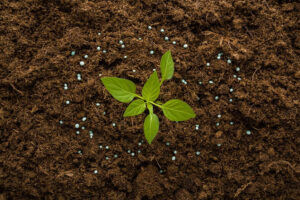
- when returned to the soil as fertilizer, these residues contribute to the regeneration of soil fertility, improvement of soil physical structure, and increased water retention, reducing the need for chemical inputs;
- ensures that the fertilizer does not pose risks to soil or groundwater—the final product undergoes a thermophilic composting process that eliminates pathogens and stabilizes organic compounds.
Innovation in organic fertilizer production
Orizon stands out for its integrated approach to organic waste valorization, combining technology, circularity, and multiple reuse routes for household and industrial waste.
At the company, sludge from Wastewater Treatment Plants and pruning residues undergo thermophilic aerobic composting, generating high-quality organic fertilizer that can be used in conventional and regenerative agriculture, reforestation and recovery of degraded areas, urban landscaping, and public green areas.
In addition to producing organic fertilizers, Orizon works with the valorization of mixed organic waste, such as household or food industry waste, directed to ecoparks where it is transformed into biogas and energy, optimizing the energy potential of the organic fraction.
This multi-use strategy makes the model more resilient, efficient, and sustainable compared to conventional waste disposal solutions.
 (11) 92217-2054